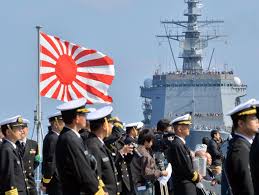
While observers are often fixated with the intensifying US-China rivalry, global – and regional – geopolitics is not defined exclusively by a binary between two powers. One often overlooked power, deeply pivotal to the Asian region, is Japan. Surpassed by China in GDP terms in 2010, Japan still retains the fourth largest economy in the world. It is also a key financer for development projects globally and fields a large de facto military – despite a long-time cap on military spending to around 1% of GDP.
Over the past three or so decades, the military balance between Japan and China – has progressively tilted in the latter’s favour. Perhaps nowhere is a growing disparity more apparent than between the two countries’ air forces. Despite only acquiring its first batch of fourth generation fighters in 1996, China now has more than 700 of these. And while Tokyo grapples with near-daily Chinese air incursions increasingly, Beijing is thought to have six times more fighters at its disposal.
Furthermore, the economic balance has also shifted tectonically during the same timeframe. In 1998, Japan’s GDP was roughly four times China’s. By 2022, it had become less than a fourth China’s figure. In fact, when China surpassed Japan to gain the mantle of the world’s second largest economy, it had already evoked concern among the latter’s public policy elite.
After all, tensions in the East China Sea had been increasing for some years, with China becoming more assertive in its claims over the Senkaku islands, which it calls Diaoyu. In 2011, Chinese ships attempted to reach the islands to assert their country’s claims of sovereignty over them. When intercepted by Japan’s coast guard, a diplomatic standoff ensued and Beijing cut off rare earth supplies for over a month. Rare earths are a series of metals used in high technology production and are a vital input for Japan’s economy. Beijing’s move was seen as a deliberate pressure tactic to get Japan to back down.
Over time, the Japanese government altered the country’s posture to a less defensive one. Shedding post-war inhibitions about the use of force, Tokyo revised its pacifist constitution in 2015. Significantly, Japan’s self-defence forces are now permitted to come to the aid of an ally in a military conflict the latter is involved in. This means they are less constrained in helping the US – the country’s main security provider. What is more, much of Japan’s defences traditionally pointed northward towards Russia – a legacy of the Cold War era. However, as part of a major overhaul, Japan has begun militarizing its southern islands, nearer to China.
Of particular concern are the disputed Senkaku Islands, which China has long claimed. In February 2024, the Japan Ground Self-Defence Force activated a 1500-member Amphibious Rapid Deployment Brigade, its first marine unit since the Second World War. The unit, raised with help from the US, is meant to counter an invasive force attempting to occupy Japanese islands along the edge of the East China Sea. What is more, on a 2014 visit to Tokyo, then President Barack Obama had iterated that the Senkaku islands fell under the US-Japan Mutual Assistance Treaty, meaning the US is obliged to come to Japan’s aid if the islands are attacked.
Still, American reassurances have not been enough to allay Japanese security concerns. There are some in Japan who believe that as the conventional balance tilts further toward China, their country might be compelled to acquire nuclear weapons as a deterrent. In fact, Japan has long been recognized as being among a select group of nations which have the technological capacity to develop nuclear weapons within a few years, should they so choose to. However, it is unlikely that the US would approve such a pursuit. Since the passing of the Nuclear Non-Proliferation Treaty, Washington has been lukewarm to any expansion of the nuclear club. There is also a strong anti-nuclear lobby in Japan, the only country to suffer an atomic attack against its cities. Yet, Japan’s conventional build-up vis-à-vis China continues for now.
Notably, Tokyo already has a significant defence-industrial base and is able to leverage close relations with partners for weapons development. While it upheld a ban on the export of lethal weapons for decades, it allowed extensive production of armaments for its self-defence forces from tanks to surface-to-air missiles. Hence, it has the know-how to design vital weapons platforms despite decades of pacifism. It has also long manufactured US-designed Patriot missiles and F-15 fighter jets under licence too. With an eye on the future, Tokyo has now partnered with the UK and Italy to develop a sixth-generation fighter, slated for induction in 2035, as part of the Global Combat Air Programme.
At the same time, Japan has also been looking to counter China across the broader Indo-Pacific region. It has provided patrol boats to Vietnam, at odds with China over the Paracel and Spratly islands, and has signed a contract to supply the Philippines with advanced air surveillance radars. As early as 2015, Tokyo had made a landmark decision to conduct unilateral patrols in the South China Sea against the backdrop of rising Chinese assertiveness in that area. Significantly, the bulk of Japan’s energy imports and a large share of its trade pass through this water body. With the US and India, the country also conducts the MALABAR naval exercises annually, alternating between the Bay of Bengal and the Western Pacific.
On a global level, Japan has also sought to provide alternatives to Chinese-financed infrastructure initiatives. During the G-7 summit at Carbis Bay in June 2021, then Prime Minister Yoshihide Suga endorsed a US-led rival infrastructure plan to China’s Belt and Road Initiative (BRI), which Japan and the US regard as a vehicle by Beijing to extend its hegemony globally. Elsewhere, Japan has been mooting its “Asia-Africa Growth Corridor” initiative in tandem with India while looking to revitalize the Asian Development Bank (ADB) to counter the growing clout of China’s Asian Infrastructure and Investment Bank (AIIB), a rival institution.
Furthermore, Japan seems to have adopted the view increasingly that competition with China is not just geopolitical in nature but also ideological. It must be noted that as early as 2012 then Prime Minister Shinzo Abe had touted the concept of “Asia’s Democratic Security Diamond” – comprising democracies such as Japan, the US, Australia, and India. And in 2021, Tokyo began echoing Washington’s concerns of rights abuses in Xinjiang as well as the introduction of the controversial National Security Law in Hong Kong, seen by many as entrenching Beijing’s hold over that territory.
Another concern is the rapid growth of China’s nuclear and missile forces. China is thought to have the fastest-growing nuclear stockpile in the world. According to one estimate, it could have 1000 nuclear warheads by 2030. And it already has more land-based launchers than the US. This renders Japanese military facilities vulnerable in the event of a conflict.
In response, Japan is now looking to acquire an enemy base strike capability, or what it prefers to call “counterstrike capability”. The possession of such a capability would allow it to hit and disable enemy missiles before they are launched from foreign territory. In February 2023, Prime Minister Fumio Kishida announced plans to bulk-order 400 Tomahawk missiles from the US. The Tomahawk, which is a land-attack cruise missile, has a range of between 550 and 2500 kilometres depending on the variant, which would strengthen Japan’s ability to strike adversaries in the region. Tokyo is also slated to induct an upgraded Type-12 missile by 2026, whose range will be quintupled from the current 200 kilometres to 1000 kilometres, and will be launched from ships.
In recent times, Japan has also felt a growing urgency to prepare for a Taiwan contingency. In fact, Japanese officials have increasingly alluded to the need to aid Taiwan in a potential conflict, drawing the ire of Beijing. This reflects a belief among Japan’s leadership that the island’s security is intrinsically linked to that of their own country. Japan’s westernmost island of Yonaguni is also only 70 miles from Taiwan roughly. In August 2022, Beijing conducted large-scale military exercises in response to the US House Speaker’s trip to Taiwan. Six Chinese ballistic missiles landed in waters near Japan’s southwestern islands, one of them near Yonaguni, and five others within Japan’s exclusive economic zone (EEZ). This was regarded as a warning to Tokyo to stay out of a China-Taiwan conflict.
In anticipation of a potential Taiwan Straits conflict, both the US and Japan have deepened defence cooperation with the Philippines, whose territory of Luzon lies close to Taiwan. In January 2023, Washington and Manila came to an agreement allowing the former to station military equipment and build facilities in nine locations across the Philippines. In October 2019, the Armed Forces of the Philippines, Japan Self-Defence Force and US Armed Forces had conducted a joint amphibious landing exercise in Katungkulan Beach. Then in December 2022, Japanese fighter jets landed in the Philippines for the first time since World War II in a symbolic deployment. This was perhaps intended to demonstrate that if Tokyo could deploy assets as far as the Philippines, it could also quickly deploy such assets to nearby Taiwan in the event of a conflict. More recently, Tokyo and Manila have also started discussing the potential deployment of Japanese troops on Filipino soil.
Lastly, the ruling Liberal Democratic Party has committed to raising defence spending, which had traditionally hovered around 1% of GDP, and no more, in the post-war period. Even so, Japan spent a colossal US $49.1 billion on defence in 2020 alone, making it the ninth largest military spender for that year. By November 2022, Kishida would tell his cabinet to increase the defence budget to around 2% of GDP by 2027, or 60% over five years. This would give Japan the third largest defence budget in the world in the near future – the largest behind only the US and China.
 Status Quo Asia
Leave a comment